
Development Trend of Bubble Removal for Inclusion in Steel (III)
2025-07-02
By comparing and analyzing various bubble refining techniques (see the attached table for details), it can be seen that the effect of inclusion removal is directly related to the size and dispersion of the bubbles produced. Generally speaking, the smaller the bubble size and the higher the bubble dispersion, the better the effect of inclusion removal in steel, especially for the removal of microscopic inclusions.
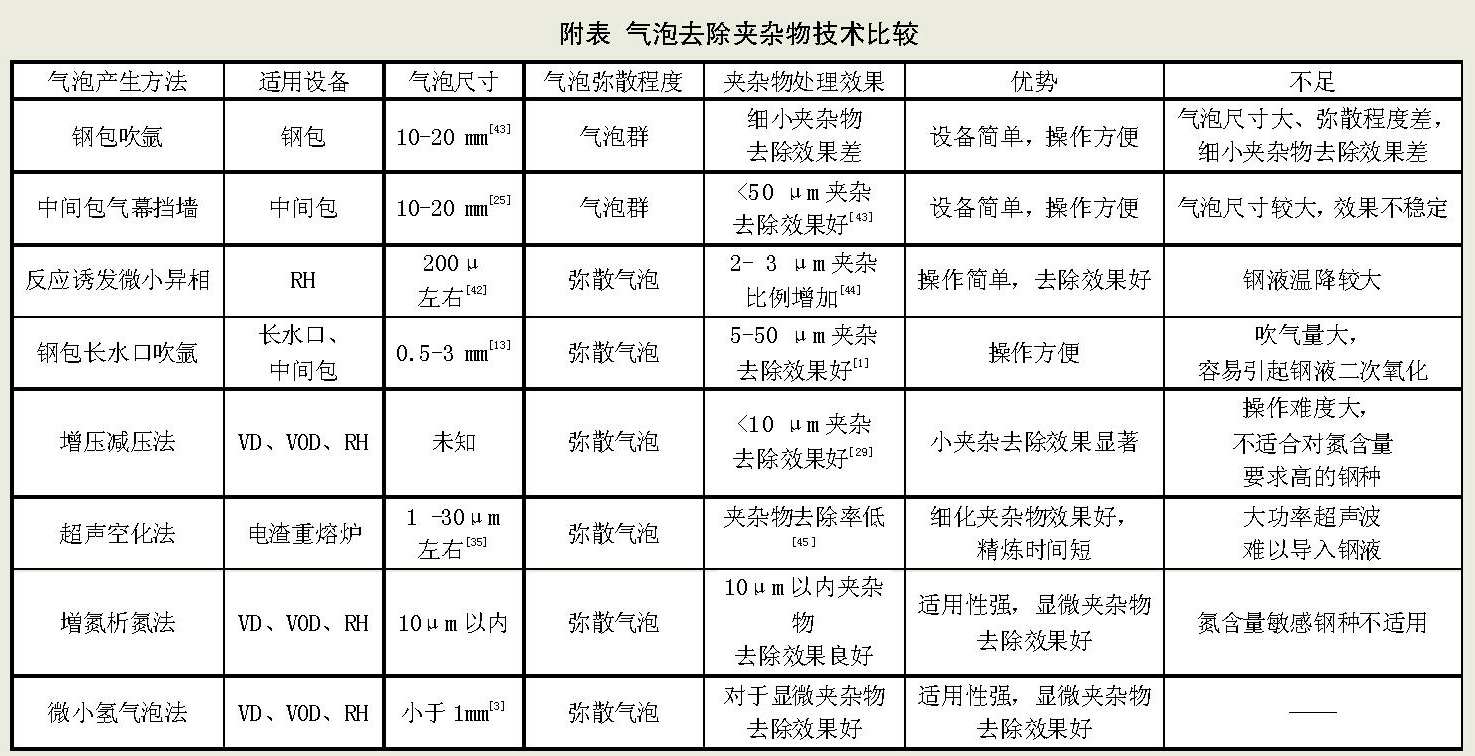
Techniques such as argon blowing in the ladle or the gas curtain wall technology in the tundish, which introduce gas into the steel through porous bricks or plugs, produce larger bubbles with poor dispersion, resulting in poor inclusion removal, especially for microscopic inclusions. However, recently developed technologies such as argon blowing through a long nozzle in the ladle, reaction-induced fine second-phase technology, pressure reduction method, ultrasonic cavitation method, nitrogen addition and precipitation method, and fine hydrogen bubble method produce smaller bubbles that are dispersed in the steel, resulting in better inclusion removal. The development of technologies using fine bubbles to remove inclusions in steel has become the mainstream in the development of bubble inclusion removal technologies.
Compared with argon blowing through a long nozzle in the ladle, reaction-induced fine second-phase technology, pressure reduction method, ultrasonic cavitation method, and nitrogen addition and precipitation method, the fine hydrogen bubble method can introduce hydrogen, natural gas, and coke oven gas into the molten steel through existing argon blowing stations or refining equipment, dissolving a large amount of hydrogen in the steel, and then forming fine dispersed bubbles in the steel through vacuum treatment, which has a good effect on removing inclusions in the steel. This technology is simple to operate and highly adaptable, and is expected to be widely applied in industrial applications.
Previous Page:
Real-time Information

—
2026-10-09
Feedback
Leave a message now, and we will arrange for a specialist to contact you as soon as possible.
HENAN SINO INDUSTRIAL REFRACTORY NEW MATERIAL CO. LTD
Factory Address:
Mazhai, Zhengzhou, China
Nanlou, Dashiqiao, China
Xinmi, Zhengzhou, China
Samut Sakhon, Thailand
Klang ,Malaysia


Copyright © Henan Sino Industrial Refractory New Material Co. Ltd
Privacy Agreement Supports IPV6 SEO