
Magnesia-carbon brick for converter refractory materials
2025-07-07
Converter steelmaking is one of the most widely used steelmaking methods in the world. Its high efficiency, short smelting cycle, low steel production cost, and suitability for various steel grades have made it the mainstream steelmaking method. Statistics show that converter steelmaking accounts for more than 70% of the world's total crude steel production, while in China, it accounts for over 90%. In recent years, converter steelmaking technology has made significant progress, with the emergence of top and bottom blowing technology and sliding plate slag tapping technology. The advent of top and bottom blowing technology, in particular, has significantly shortened smelting time, resulting in more uniform steel composition and temperature, lower S, P, and N content in the steel, and improved metal yield. However, with the increase in converter blowing ratio, the converter service life has decreased significantly.
During the steelmaking process, the converter lining is eroded by a series of intense mechanical, physical, and chemical actions. The converter top and bottom blowing process, which involves installing porous bricks at the bottom of the converter to blow oxygen, carbon dioxide, argon, or nitrogen into the furnace, enhances molten pool stirring, improves smelting reactions, shortens steelmaking time, improves steel quality, and reduces steelmaking costs. However, top and bottom blowing also accelerates the erosion of refractory materials in the lining, with different parts of the converter lining experiencing erosion under different conditions.
(1) Scouring or mechanical impact [2]
Operations such as adding scrap steel and molten iron are directly aimed at the large surface lining of the converter, causing strong impact, wear, and scouring on the large surface lining, which is a major factor in the erosion of the refractory lining.
Physical erosion during smelting includes the scouring of the furnace wall and furnace cap refractory materials by the internal gas flow, the melting and scouring of the lining by molten steel and slag, and the melting damage to the lining caused by high-temperature reactions during smelting.
(2) Oxidation and chemical erosion [3-5]
Oxidation is a major cause of erosion of magnesia-carbon bricks in converter linings. During this process, the carbon component in the magnesia-carbon bricks is oxidized by oxygen-containing components (such as high-temperature oxidizing gases, iron oxide, oxygen, and magnesium oxide), leading to loosening and embrittlement of the material structure.
Fe0 +C(s)=Fe +CO(g) (1)
o2(g)+2C(s)=2C0(g) (2)
MgO(s)+C(s)=Mg(g)+CO(g) (3)
(3) Iron oxide in the slag reacts with graphite or tar/resin on the hot surface of the brick lining, or oxygen erodes the graphite or binder on the cold surface of the brick lining. In both cases, the strength of the brick is reduced, and it is eroded by gas and metal liquid flow.
The chemical reactions between iron oxide (Fe0) or acidic components in the slag, such as Si0, and Ca0 and MgO are shown below:
Fe0 + MgO =FeO ·MgO (4)
Si0,+2Mg0 =2Mg0·Si02 (5)
CAO+SIO2+MgO=Ca0 ·MgO·Si0
All of the above reactions can cause the lining to become slag, thus leading to the destruction of the refractory material.
(3) Thermal shock spalling. The working environment of the gas supply components is high pressure and high flow rate [high pressure] >1MPa, flow rate 0.15~0.2 m/(min·t)], and its damage mechanism is spalling and scouring wear caused by thermal stress concentration.
(4) Abrasion, melting, and spalling
During the steel tapping process, the sliding nozzle and sliding plate are subjected to scouring by high-temperature molten steel and slag, erosion and penetration by strongly alkaline slag, and intermittent high-temperature (~1600℃) thermal shock impact. In addition, during the slag tapping operation, the sliding plate is subjected to abrasion by the slag. Therefore, scouring and erosion by high-temperature molten steel and slag, high-temperature oxidation, wire drawing abrasion of the sliding surface, and thermal shock damage are the main modes of damage.
Future optimization directions for refractory materials used in steelmaking converters: ① Develop high-performance, wear-resistant, thermal shock-resistant, low-carbon magnesia-carbon bricks; ② Develop fast-sintering, pollution-free hot-repairing materials and long-life spraying materials; ③ Develop long-life bottom-blowing gas supply components, optimize the bottom tuyere structure and layout to meet the requirements of advanced steelmaking technologies such as top and bottom blowing, bottom oxygen steelmaking, bottom-blowing powder injection, bottom oxygen supply, and bottom blowing CO; ④ Improve the performance and structure of slag tapping sliding plates to extend service life and reduce daily replacement frequency.
Development and application of high-performance lining bricks
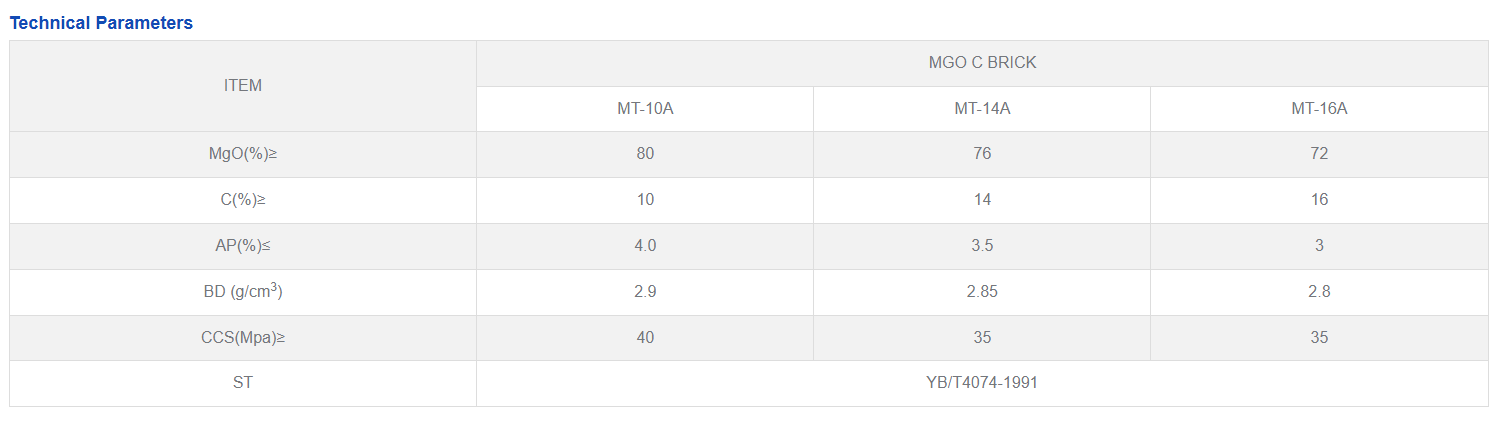
Magnesia-carbon bricks are widely used in converter lining bricks due to their excellent slag erosion resistance, thermal shock resistance, spalling resistance, and wear resistance, and good stability at high temperatures. Due to the problems of easy oxidation leading to deterioration of thermal shock resistance and erosion resistance of magnesia-carbon bricks, researchers have conducted extensive exploration and research. The key technological hotspots are as follows [-川: ① Application of anti-oxidation and self-repairing new composite antioxidants: Using metal Al, Si powder, or A-Si composite powder as antioxidants for magnesia-carbon bricks, in-situ reactions to generate SiC, AIN, etc., high erosion-resistant phases during heat treatment or high-temperature service, significantly improving the performance of low-carbon magnesia-carbon materials. ② Preparation and application of low-dimensional graphitized carbon: Addition and application of various pre-synthesized nano-carbons such as nano-carbon black, nano-graphite-oxide composite powders; in-situ synthesis of low-dimensional graphitized carbon: Selecting suitable transition elements (Fe, Co, Ni) inorganic or organic compounds as catalysts, phenol resin pyrolysis produces CO, C, and CH, etc., gases forming carbon nanotubes, nano-carbon fibers, etc., low-dimensional graphitized carbon under the catalytic action of transition metals. Through the development and application of these new technologies, MgO-C bricks maintain good erosion resistance and thermal shock resistance.
Previous Page:
Next Page:
Feedback
Leave a message now, and we will arrange for a specialist to contact you as soon as possible.

HENAN SINO INDUSTRIAL REFRACTORY NEW MATERIAL CO. LTD
Factory Address:
Mazhai, Zhengzhou, China
Nanlou, Dashiqiao, China
Xinmi, Zhengzhou, China
Samut Sakhon, Thailand
Klang ,Malaysia


Copyright © Henan Sino Industrial Refractory New Material Co. Ltd
Privacy Agreement Supports IPV6 SEO