
JC/T 616-2003 High quality silica brick for glass kiln
2023-11-15
High-quality silica bricks for glass kilns
1 Scope
This standard specifies the classification, technical requirements, test methods, inspection rules, marking, packaging, transportation, storage, and requirements for quality certificates of high-quality silica bricks for glass kilns.
This standard applies to high-quality silica bricks (hereinafter referred to as the product) with a single weight of no more than 40kg, which are machine-pressed and used for building glass kilns.
2 Normative References
The clauses of the following documents become clauses of this standard through reference in this standard. For dated reference documents, only the edition cited applies. For undated reference documents, the latest edition of the referenced document (including any amendments) applies. Parties to agreements based on this standard are encouraged to investigate the possibility of applying the most recent editions of the referenced documents.
GB/T 29972000 Test methods for apparent porosity, water absorption, bulk density and true porosity of dense shaped refractory products.
GB/T 5071 Test method for true density of refractory materials.
GB/T 5072 Test method for compressive strength at room temperature of dense shaped refractory products.
GB/T 5988 Test method for linear change on reheating of dense shaped refractory products.
YB/T 370–1995 Test method for load softening temperature of refractory products (non-differential temperature rise method).
GB/T 6901 Chemical analysis methods for siliceous refractory materials.
GB/T 7320.1 Test method for thermal expansion of refractory products.
GB/T 7321 Specification for sample preparation for testing of dense shaped refractory products.
GB/T 10325-2001 Rules for sampling and acceptance inspection of shaped refractory products.
GB/T 10326-2001 Inspection methods for dimensions, appearance and section of refractory products.
GB/T 16546-1996 Packaging, marking, transportation and storage of shaped refractory products.
YB/T 4017 Shape and size of refractory products for glass kilns Silica bricks.
3 Classification, Shape and Size
3.1 Classification Products are divided into three grades according to their single weight, see Table 1.
Table 1 Product Classification | |
Grade | Single weight, kg |
XBG-96 | ≤15 |
ZBG-96 | 15.1~25 |
DBG-96 | 25.1~40 |
Note 1: X, 2, and D in the grade refer to the first letters of the Pinyin of small, medium, and large, respectively. B and G refer to the Pinyin initials of glass kiln and silica brick, respectively.
3.2 The shape and size of the product shall conform to the provisions of YB/T4017.
4 Technical Requirements
4.1 The physicochemical properties of the product shall conform to the provisions of Table 2.
Table 2 Physicochemical Properties of Products | ||||||
Item | Unit | Index | ||||
XBG-96 | ZBG-96 | DBG-96 | ||||
Chemical Composition | SiO 2 | ≥ | % | 96 | 96 | 96 |
Fe 2 O 3 | ≤ | % | 0.8 | 0.8 | 0.8 | |
Melting index (Al 2 O 3 )+2RO 2) | ≤ | % | 0.5 | 0.5 | 0.5 | |
Physical Properties | Apparent porosity | ≤ | % | 21 | 21 | 21 |
True density | ≤ | g/cm³ | 2.34 | 2.34 | 2.34 | |
0.2MPa load softening | ≥ | ℃ | 1680 | 1680 | 1680 | |
Compressive strength at room temperature | ≥ | MPa | 35 | 30 | 30 | |
Reheating linear change (1450℃x2h) | ≤ | % | +0.2 | +0.2 | +0.2 | |
Thermal expansion coefficient (0℃~1450℃) | % | Provide measured data | ||||
4.2 The appearance quality, dimensional tolerances and section inspection of the product shall conform to the provisions of Table 3.
4.3 The technical requirements for hand-made bricks and bricks with a single weight greater than 40kg shall be agreed upon by both the supplier and the demander.
4.4 The cold surface of the wedge brick must be marked. The marking uses the "groove" method. The groove should be located on the center line of the cold surface of the brick. The periphery of all grooves should be star-shaped arcs. The groove should not penetrate the cold surface. The marking should be on one side of the opposite side of the pressure surface. The groove size is not specified, as shown in Figure 1:
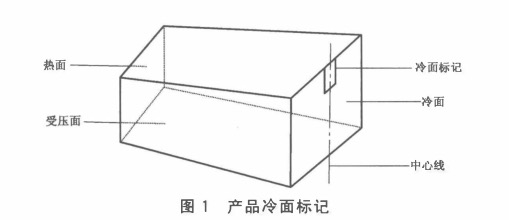
Table 3 Dimensional Tolerances, Appearance and Section Inspection Requirements of Products Unit: mm | |||||||
Item | Index | ||||||
XRG-96 | ZBG-96 | DBG-96 | |||||
Dimensional Tolerance | Size | ≤100 | ±1 | ±1.5 | ±1.5 | ||
>100~≤350 | ±2 | ±2.5 | ±2.5 | ||||
>350 | ±3 | ±3.5 | ±3.5 | ||||
| Wedge difference | 2 | 2 | 2 | |||
Twist | Length | ≤250 | ≤ | 1 | 1 | 1 | |
>250~≤450 | ≤ | 1.5 | 1.5 | 1.5 | |||
>450 | ≤ | 2 | 2 | 2 | |||
Missing edge length (a+b+c) | Working surface | ≤ | 21 | 25 | 40 | ||
Non-working surface | ≤ | 40 | 50 | 60 | |||
Missing corner depth (d+e+f) | Working surface | ≤ | 21 | 25 | 40 | ||
Non-working surface | ≤ | 40 | 50 | 60 | |||
Melt hole diameter | Working surface |
| Not allowed | ≤5 | ≤5 | ||
Non-working surface | ≤ | 5 | 10 | 10 | |||
Crack length | Width ≤0.1 |
| Allowed | Allowed | Allowed | ||
Width 0.1~0.25 (including 0.25) | Working surface | ≤ | 30 | 30 | 30 | ||
Non-working surface | ≤ | 50 | 50 | 50 | |||
Width 0.25~0.5 (including 0.5) | Working surface |
| Not allowed | Not allowed | Not allowed | ||
Non-working surface | ≤ | 30 | 30 | 30 | |||
Width >0.5 |
| Not allowed | Not allowed | Not allowed | |||
Cross-section | Layer cracking |
| Not allowed | Not allowed | Not allowed | ||
Note 1: The working surface of a straight product is one end face and one side; for a wedge-shaped product, it is the small end face or side; for other products, it is the surface specified in the drawing. Note 2: Cracks are only allowed to cross one school; cross-school cracks are not combined for calculation. | |||||||
5 Test methods
5.1 Chemical composition according to GB/T 6901.
5.2 Bulk density, apparent porosity according to GB/T 2997-2000
5.3 True density according to GB/T 5071.
5.4 Room temperature compressive strength according to GB/T 5072
5.5 Reburning line change rate according to GB/T 5988.
5.6 Load softening temperature according to YB/T 370-1995
5.7 Thermal expansion rate according to GB/T 7320.1.
5.8 Inspection of brick size tolerance, appearance and cross-section according to GB/T10326-2001.
6 Inspection rules
6.1 Each 150 tons is a batch for inspection; if less than 150 tons, it is still counted as one batch.
6.2 The sampling plan for size and appearance inspection shall be carried out according to the provisions of Table 4 (equivalent to GB/T 10325-2001). Let the number of non-conforming items in the sample size (m) be y. If y≤c, the entire batch of products is a qualified batch; if y>c, the entire batch of products is a non-conforming batch.
Table 4 Sampling plan | ||
Batch (number of pieces) N | Sample size, n | Acceptance number, c |
51~90 | 5 | 1 |
91~150 | 8 | 1 |
151~280 | 13 | 2 |
281~500 | 20 | 3 |
501-1200 | 32 | 5 |
1201~3200 | 50 | 7 |
>3200 | 80 | 10 |
6.3 The physical and chemical performance items to be assessed according to this standard are chemical composition, apparent porosity, room temperature compressive strength, and load softening temperature. It can also be agreed upon by both the supplier and the demander.
6.4 Samples for destructive testing shall be taken from samples that have passed the appearance inspection. The single test values must meet the requirements of the corresponding test items in Table 2. If the first sampling inspection does not meet the requirements, a double quantity of test samples shall be randomly selected from the batch of products for re-inspection of the non-conforming item. If the average value of the re-inspection results meets the requirements, and all the single test values are within the deviation specified in the product standard or the deviation agreed upon by the supplier and the demander, the batch is judged as a qualified batch; otherwise, it is judged as a non-conforming batch. The allowable deviation of the test results shall conform to the provisions of Table 5.
Table 5 Allowable deviation of physical and chemical properties of products | |||
Item | Unit | Allowable deviation | Example |
SiO 2 | % | -0.3 | The grade of high-quality silica brick is XBG-96 SiO 2 ≥96%, allowing single SiO 2 ≥95.7%. |
Fe 2 O 3 | % | +0.1 | The grade of high-quality silica brick is XBG-96 Fe 2 O 3 <0.9%, allowing single Fe 2 O 3 ≤1.0%. |
Melting index | % | 0 | The melting index of high-quality silica brick of grade XBG-96 ≤0.5. |
Apparent porosity | % | +1 | The apparent porosity of high-quality silica brick of grade XBG-96 ≤22%, allowing a single apparent porosity ≤23%. |
True density | g/cm³ | +0.01 | The true density of high-quality silica brick of grade XBG-96 ≤2.34, allowing a single true density ≤ |
0.2MPa load softening | ℃ | -10 | The load softening temperature of high-quality silica brick of grade XBG-96 ≥1680℃, allowing a single load softening temperature ≥1670℃. |
Compressive strength at room temperature | MPa | -5 | The room temperature compressive strength of high-quality silica brick of grade XBG-96 ≥40MPa, allowing a single compressive strength ≥35MPa |
Reheating linear change (1450℃x2h) | % | +0.1 | The reburning line change rate of high-quality silica brick of grade XBG-96 ≤+0.3%, allowing a single reburning line change rate ≤+0.4%. |
7 Packaging, marking, transportation, storage and quality certificate
7.1 Marking, packaging, transportation, and storage shall comply with the provisions of GB/T 16546.
When 7.2 bricks are shipped, a quality certificate issued by the quality supervision department must be attached, stating the supplier's name, purchaser's name, production date, contract number, product name, standard number, brand, batch number, size, appearance and physicochemical indicators.
High quality silica brick for glass kiln
1 Range
This standard specifies the classification, technical requirements, test methods, inspection rules and marking, packaging, transportation, storage and quality certificate requirements of high-quality silica bricks for glass kilns.
This standard applies to high quality silicon bricks with a single weight of not more than 40kg (hereinafter referred to as the product), which are pressed by the machine for masonry glass inspection.
2 Normative reference documents
The terms in the following documents become terms of this Standard by reference to this Standard. All subsequent amendments (excluding errata) or revisions to dated citations are not applicable to this Standard; however, parties to an agreement under this Standard are encouraged to explore the use of the most recent version of these documents. For undated references, the latest version of the document applies to this standard.
GB/T 29972000 Test method for apparent porosity, water absorption, bulk density and true porosity of dense shaped refractory products.
GB/T 5071 refractories true density test method.
GB/T 5072 compact shaped refractory products test method for compressive strength at room temperature.
GB/T 5988 compact shaped refractory products test method for reburning line change.
YB/T 370-1995 Test method for load softening temperature of refractory products (non-differential rising temperature method).
GB/T 6901 Method for chemical analysis of silica refractories.
GB/T 7320.1 Test method for thermal expansion of refractory products.
GB/T 7321 dense shaped refractory product test sample preparation provisions.
GB/T 10325-2001 Rules for sampling acceptance of shaped refractory products.
GB/T 10326-2001 Method for inspection of size, appearance and section of refractory products.
GB/T 16546-1996 Packaging, marking, transport and storage of shaped refractory products.
YB/T 4017 Glass kiln refractory products Shape size silicon brick.
3 Classification, shape and size
3.1 Classification Products are divided into three brands according to their single weight, as shown in Table 1.
Table 1 Product classification | |
Brand | Single weight,kg |
XBG-96 | ≤15 |
ZBG-96 | 15.1~25 |
DBG-96 | 25.1~40 |
Note 1: X, 2 and D in the brand respectively refer to the initial letters of small, medium and large Chinese pinyin. B and G are the initials of glass kiln and silicon brick in Chinese pinyin.
3.2 The shape and size of the product shall comply with the provisions of YB/T4017
4 Technical Requirements
4.1 The physical and chemical properties of the product shall comply with the provisions of Table 2.
Table 2 Physical and chemical properties of the products | ||||||
Item | Unit | Index | ||||
XBG-96 | ZBG-96 | DBG-96 | ||||
Chemical composition | SiO 2 | ≥ | % | 96 | 96 | 96 |
Fe 2 O 3 | ≤ | % | 0.8 | 0.8 | 0.8 | |
Melt index(Al 2 O 3 )+2RO 2) | ≤ | % | 0.5 | 0.5 | 0.5 | |
Physical property | Apparent porosity | ≤ | % | 21 | 21 | 21 |
True density | ≤ | g/cm³ | 2.34 | 2.34 | 2.34 | |
0.2MPa load softening starting temperature | ≥ | ℃ | 1680 | 1680 | 1680 | |
Compressive strength at room temperature | ≥ | MPa | 35 | 30 | 30 | |
Heavy burn line change(1450℃x2h) | ≤ | % | +0.2 | +0.2 | +0.2 | |
Thermal expansion rate(0℃~1450℃) | % | Provide measured data | ||||
4.2 Product appearance quality, size permissible deviation and section inspection shall comply with the provisions of Table 3
4.3 The technical requirements for handmade bricks and bricks of single weight greater than 40kg shall be agreed upon by both parties.
The cold side of the wedge-shaped brick must be marked, and the marking shall adopt the “groove” method. Grooves should be located in the center line of the cold surface of the brick, and all the grooves should be curved around the star, so that the grooves should not run through the cold surface, and the marks should be on the opposite side of the pressure surface, and the grooves size is not specified, as shown in Figure1:
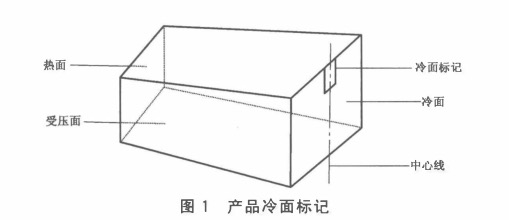
Table 3: Requirements for inspection of allowable deviations in size, appearance and section of the product Unit:mm | |||||||
Item | Index | ||||||
XRG-96 | ZBG-96 | DBG-96 | |||||
Allowable deviation of dimension | Dimension | ≤100 | ±1 | ±1.5 | ±1.5 | ||
>100~≤350 | ±2 | ±2.5 | ±2.5 | ||||
>350 | ±3 | ±3.5 | ±3.5 | ||||
| Wedge difference | 2 | 2 | 2 | |||
Distortion | Length | ≤250 | ≤ | 1 | 1 | 1 | |
>250~≤450 | ≤ | 1.5 | 1.5 | 1.5 | |||
>450 | ≤ | 2 | 2 | 2 | |||
Missing Angle length(a+b+c) | Working face | ≤ | 21 | 25 | 40 | ||
Non-working face | ≤ | 40 | 50 | 60 | |||
Missing edge length(e+f+g) | Working face | ≤ | 21 | 25 | 40 | ||
Non-working face | ≤ | 40 | 50 | 60 | |||
Hole diameter | Working face |
| Not allow | ≤5 | ≤5 | ||
Non-working face | ≤ | 5 | 10 | 10 | |||
Crack length | Breadth≤0.1 |
| Allow | Allow | Allow | ||
Width 0.1~0.25(including 0.25) | Working face | ≤ | 30 | 30 | 30 | ||
Non-working face | ≤ | 50 | 50 | 50 | |||
Width 0.25~0.5(including 0.5) | Working face |
| Not allow | Not allow | Not allow | ||
Non-working face | ≤ | 30 | 30 | 30 | |||
Breadth>0.5 |
| Not allow | Not allow | Not allow | |||
Section | Slabbing |
| Not allow | Not allow | Not allow | ||
Note 1: The working surface of the product is one end face and one side of the straight product; a small face or side of a wedge-shaped product; other products according to the drawing specified surface. Note 2: Cracks are only allowed to cross one grain boundary; cross-grain cracks are not allowed. | |||||||
5 Test Methods
5.1 Chemical composition according to GB/T 6901.
5.2 Bulk density and apparent porosity are calculated according to GB/T 2997-2000
5.3 The true density is GB/T 5071.
5.4 The compressive strength at room temperature shall be GB/T 5072
5.5 The reburn wire change rate is GB/T 5988.
5.6 The load softening temperature was carried out according to YB/T 370-1995
5.7 The thermal expansion rate is GB/T 7320.1.
5.8 The inspection of allowable deviation, appearance and section of bricks shall be carried out in accordance with GB/T10326-2001.
6 Inspection Rules
6.1 Each 150 tons shall be one inspection lot; if less than 150 tons, it shall be counted as one lot.
6.2 The sampling scheme for dimensional and visual inspection shall be carried out as specified in Table 4 (equivalent to GB/T 10325-2001). Set the number of unqualified items in sample size (m) as y; if y≤c, the whole batch of products is qualified; if y>c, the whole batch of products is unqualified.
Table 4 Sampling scheme | ||
Batch (number of blocks) N | Sample size, n | Number of receptions, c |
51~90 | 5 | 1 |
91~150 | 8 | 1 |
151~280 | 13 | 2 |
281~500 | 20 | 3 |
501-1200 | 32 | 5 |
1201~3200 | 50 | 7 |
>3200 | 80 | 10 |
6.3 The physical and chemical properties of bricks are as follows: chemical composition, apparent porosity, compressive strength at room temperature and softening temperature under load. It can also be agreed upon between the supplier and the purchaser.
6.4 Samples for destructive testing shall be taken from samples that have passed the inspection. All test values must conform to the requirements of the corresponding test items in Table 2. If the first sampling inspection does not meet the requirements, the batch of products shall be randomly selected to double the number of test samples for the reinspection of the unqualified items. If the average value of the reinspection results meets the requirements, in which the test single value is within the deviation specified in the product standard or the deviation between the supply and demand parties, the batch shall be judged as qualified; otherwise, it will be judged as unqualified. The permissible deviation of the test result of the sample shall comply with the provisions of Table 5.
Table 5 Allowable deviations of physical and chemical properties of products | |||
Item | Unit | Allowable deviation | Take an example |
SiO 2 | % | -0.3 | The grade of high-quality silicon brick is SiO2≥96% of XBG-96, allowing a single SiO2≥95.7%. |
Fe 2 O 3 | % | +0.1 | The grade of high-quality silicon brick is XBG-96 Fe2O3<0.9%, allowing a single Fe2O3≤1.0%. |
Melt index | % | 0 | The melting index of high-quality silicon brick is XBG-96 ≤0.5. |
Apparent porosity | % | +1 | The apparent porosity of high-quality silicon brick brand XBG-96 is less than 22%, allowing a single apparent porosity ≤23%. |
True density | g/cm³ | +0.01 | The true density of high-quality silicon brick is XBG-96 ≤2.34, allowing a single true density ≤ 2.35g/cm. |
0.2MPa load softening Starting temperature | ℃ | -10 | High-quality silicon brick brand XBG-96 load softening temperature ≥1680℃, allowing a single load softening temperature ≥1670℃. |
Compressive strength at room temperature | MPa | -5 | The grade of high-quality silicon brick is XBG-96, which has a normal temperature compressive strength ≥40MPa, and allows a single compressive strength ≥35MPa |
Reburn line change (1450℃x2h) | % | +0.1 | The reburning line change rate of high-quality silicon brick brand XBG-96 is ≤+0.3%, allowing a single reburning line change rate ≤+0.4%. |
7 Packing, marking, transportation, storage and quality certificate
7.1 Marking, packaging, transportation and storage shall comply with the provisions of GB/T 16546.
7.2 The bricks must be delivered with a quality certificate issued by the quality supervision department, indicating the name of the supplier, the name of the buyer, the date of production, the contract number, the name of the product, the standard number, the grade number, the batch number, the size, the appearance and the physical and chemical index.
Feedback
Leave a message now, and we will arrange for a specialist to contact you as soon as possible.

HENAN SINO INDUSTRIAL REFRACTORY NEW MATERIAL CO. LTD
Factory Address:
Mazhai, Zhengzhou, China
Nanlou, Dashiqiao, China
Xinmi, Zhengzhou, China
Samut Sakhon, Thailand
Klang ,Malaysia


Copyright © Henan Sino Industrial Refractory New Material Co. Ltd
Privacy Agreement Supports IPV6 SEO