
Refractory Materials for Smelting non-ferrous metals (4)
2025-01-08
Refractory materials for zinc smelting Refractory materials for zinc smelting include: refractory materials for zinc smelting baking furnace, reduction distillation furnace and rectification equipment.
(1) Baking furnace, the general roasting temperature is 1070~1120℃, the general use of clay bricks and high aluminum bricks can meet the requirements.

Reduction distillation furnace is a thermal equipment for the production of metal zinc or crude zinc. First, 29%~33% of high quality coking coal is added to calcine, calciner ash and an appropriate amount of binder are mixed and pressed into clumps, and then clumps with a certain strength are formed under the condition of 800℃, which is the raw material of the reduction distillation furnace.
Vertical distillation furnace: consists of a vertical distillation tank, a combustion chamber and an air passage. The distillation tank is generally constructed of clay with good heat transfer performance and high strength combined with silicon carbide bricks. Huludao Zinc plant in China uses silicon carbide corrugated brick to build the inner wall of the distillation tank, which increases the thermal radiation surface by about 18% compared with the standard brick. At the same time, the brick is laid in the vertical groove, which reduces the resistance of the air flow rising, reduces the pressure in the furnace and speeds up the reaction speed. When the inner wall of the tank is corroded greatly, or there are local holes, silicon carbide spray coating can be used for hot spray repair. The working temperature of the combustion chamber is 300~1360℃, the working layer is built with silicon brick, and the rest is built with clay brick.
The condenser, the horizontal bottom and the working layer of the side wall are laid with high aluminum bricks, and the other parts are laid with clay bricks. The condenser is equipped with a rotor, the rotor shaft is made of graphite material, the use of silicon carbide material can significantly improve the life.
Electric distillation furnace: It is mainly composed of cylindrical furnace body, condenser and electrode heating device. The working layer of the vulnerable part of the furnace is built with silicon carbide brick, the other parts of the working layer is built with clay brick, and the non-working layer is built with clay heat insulation brick, which has a high service life.
Rectification equipment, consisting of melting furnace, refining furnace, combustion chamber, rectification tower and condenser.
The middle part of the distillation tower, that is, the combustion chamber and heat exchanger are provided on both sides of the distillation chamber, and the upper part of the tower is provided with a condenser, which is connected with the lead tower and cadmium tower and the melting furnace by means of a channel. Generally installed in the tower 40~60 tray, divided into two kinds of distillation tray and reflux tray, are made of silicon carbide materials, thickness of 30~50mm, condenser and various channels and other parts of the working layer is generally built with silicon carbide brick; The working layer of the combustion chamber and heat exchanger of the melting furnace and the lower extension part of the rectification tower is generally built with clay brick, the non-working layer is built with thermal insulation brick such as floating bead brick, and the tower wall is built with silicon carbide brick. The service life of the crude zinc continuous rectification and refining equipment depends on the working life of the silicon carbide tray, and the damage is mainly caused by temperature fluctuations and chemical erosion. Lead tower life is generally 1 to 2 years, cadmium tower life is 2 to 3 years.
At present, the development trend of non-ferrous metallurgy is to constantly adopt new processes and new technologies, update furnace equipment, strengthen smelting operations, and improve productivity. Therefore, with the large-scale and high-efficiency of non-ferrous metallurgy furnaces, the variety of refractory materials used is expanded, the quality is improved, and the quantity is increased.
Under normal circumstances, non-ferrous metallurgy refractories account for 2% to 6% of the total consumption of refractories, of which clay bricks account for 25%, high-aluminum bricks account for 5% to 16%, and alkaline bricks account for 10% to 17%. The proportion of amorphous refractories used is increasing.
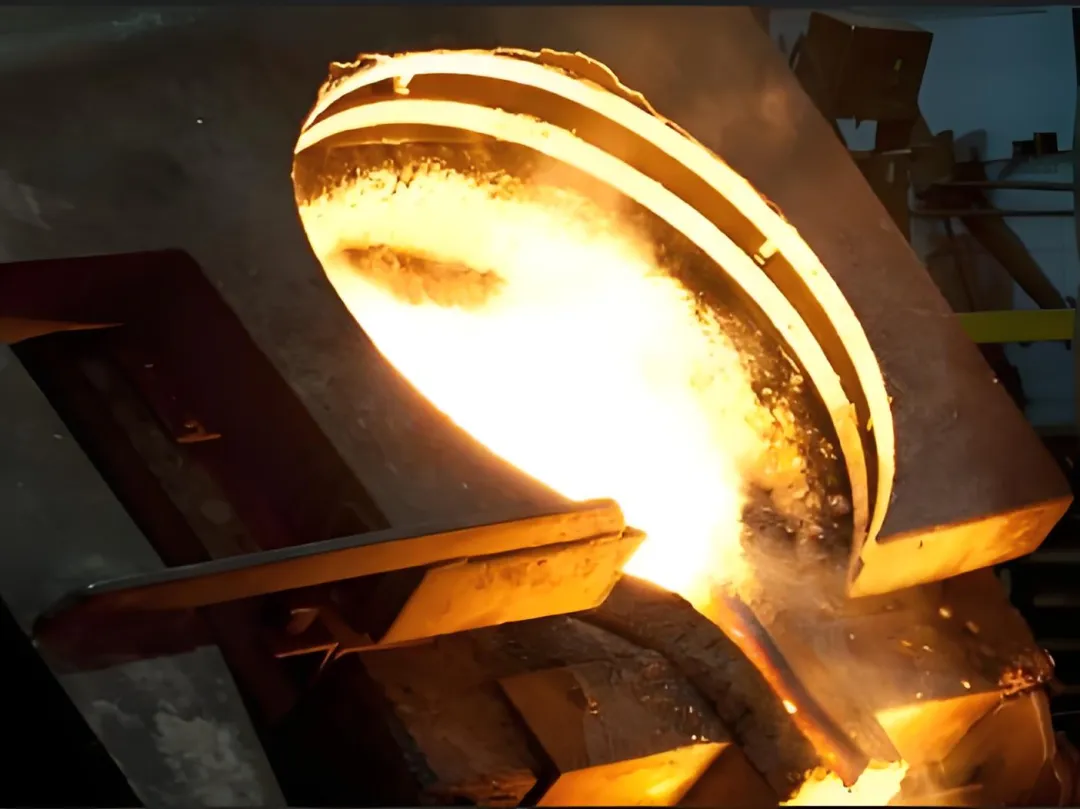
The damage mechanism of non-ferrous metal lining is mainly caused by the penetration of molten metal, metal oxide or slag and the action of temperature stress. There is a temperature gradient in the furnace lining, and when molten metal, oxide or slag permeates deep inside along the gaps or pores in the lining, three things happen:
1) The molten metal oxidized, reduced or formed a low melting point mineral, resulting in erosion of the lining, or cracking and spalling;
2) Molten metal or oxide deposition, causing the lining to expand and collapse;
3) Strong alkaline molten metal or molten slag has strong fluidity, and the erosion and erosion of the lining are more serious.
The melting point of copper is 1083℃. In the smelting process, the molten metal copper penetrates into the lining, and oxidation occurs along with volume expansion. When copper is oxidized to CuO₂, the volume increases by 0.64 times, and when oxidized to CuO, the volume increases by 0.75 times. Due to the different changes in volume, the structure of the lining cracks, cracks, and even spalling.
At a certain temperature, copper oxides can react with some oxides of refractory lining to form a liquid phase, such as copper oxide and SIO2 eutectic point is 1060℃, eutectic point with MgO is 1135℃, and Cr₂O₃ eutectic point is more than 1560℃. Due to the formation of low melting material, the structure of the lining is destroyed, and the corrosion phenomenon occurs, and the service life is reduced. In addition, in the process of non-ferrous metal smelting, the slag contains a lot of iron silicate, the erosion of magnesia brick is more serious, and the erosion of magnesia chrome brick of spinel containing chromium is lighter, so the non-ferrous metal melting furnace generally uses magnesia chrome brick as the lining.
Metal copper, zinc, especially lead, the most easy to penetrate into the masonry, in the low oxygen partial pressure of the furnace lining cold surface is constantly deposited, so2 that the masonry to the furnace swelling and damage. If the furnace lining is seriously damaged, the penetration of the melt can cause leakage accidents and directly affect the production.
In the process of smelting, due to the sudden change of temperature in the furnace, the lining may crack and flake. In addition, at the appropriate temperature, SO₂ in the exhaust gas interacts with the cubic magnesite of the alkaline brick to generate magnesium sulfate, which causes the organizational structure of the masonry to collapse and reduces the service life. Under normal conditions, the lining parts that are in contact with metal molten liquid and molten slag are generally laid with materials such as advanced alkaline brick, silicon carbide brick, silicon nitride brick or quartz brick, and the use effect is good.
Previous Page:
Real-time Information

—
2026-10-09
Feedback
Leave a message now, and we will arrange for a specialist to contact you as soon as possible.
HENAN SINO INDUSTRIAL REFRACTORY NEW MATERIAL CO. LTD
Factory Address:
Mazhai, Zhengzhou, China
Nanlou, Dashiqiao, China
Xinmi, Zhengzhou, China
Samut Sakhon, Thailand
Klang ,Malaysia


Copyright © Henan Sino Industrial Refractory New Material Co. Ltd
Privacy Agreement Supports IPV6 SEO